
Quick answer: Yes. A damp survey identifies why mould is growing, not just where. A qualified surveyor checks for water ingress, plumbing leaks, condensation, humidity and poor ventilation. It diagnoses the moisture source. It does not usually identify mould species.
What does a damp survey find?
A damp survey finds the moisture source behind the mould. Mould is the symptom. Excess moisture is the cause.
A surveyor looks for:
- Water ingress (penetrating damp)
- Rising damp
- Plumbing leaks
- Condensation
- High indoor humidity
- Inadequate ventilation
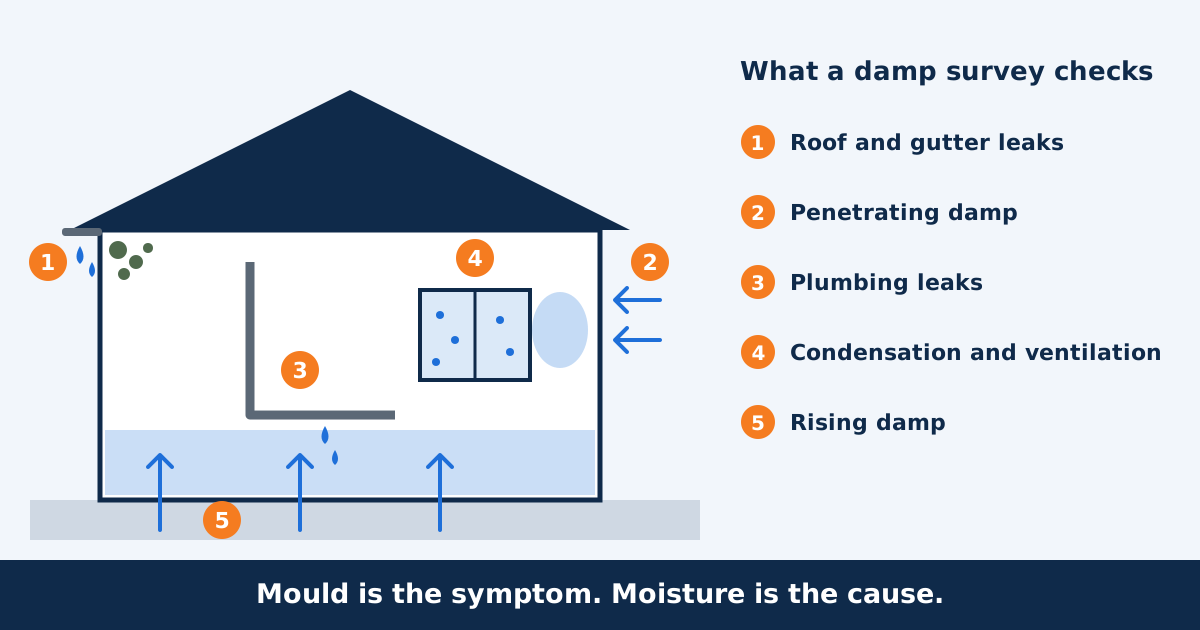
How does a damp survey find the cause of mould?
A surveyor works through three checks. Each one rules a cause in or out.
1. Moisture source inspection
The surveyor inspects the building for defects that let water in.
- Leaking or blocked gutters
- Roof defects
- Plumbing leaks
- Bridged cavities
- Failed seals around windows and doors
Treating mould without fixing the source rarely works. The mould returns.
2. Humidity and wall moisture testing
Surveyors use two calibrated instruments:
- Hygrometer: measures relative humidity in the room.
- Damp meter: measures moisture in walls and surfaces.
Readings show whether moisture is coming from the structure or from the air. A meter reading is an indicator. The surveyor interprets it alongside the construction of the building and the visible signs.
3. Ventilation and condensation assessment
Poor ventilation traps humid air indoors. Warm, moist air then condenses on cold surfaces. Repeated condensation creates the conditions mould needs.
The surveyor checks for:
- Broken or underpowered extractor fans
- Blocked air bricks and vents
- Poor air circulation in kitchens, bathrooms and bedrooms
- Cold external walls and corners where condensation forms
Which causes of mould can a survey identify?
| Cause | How a survey identifies it |
|---|---|
| Penetrating damp | Inspection of roof, gutters, walls and seals; damp meter readings |
| Rising damp | Damp meter readings at low wall level; staining and salt patterns |
| Plumbing leak | Moisture patterns near pipes, appliances and fixtures |
| Condensation | Hygrometer readings, ventilation assessment, location of mould on cold surfaces |
| Poor ventilation | Inspection of extractors, vents and airflow |
What can a damp survey miss?
A standard damp survey does not investigate everything. Know the limits before you book.
Mould species identification
A standard survey treats visible mould as a symptom. It does not usually include:
- Airborne spore counts
- Laboratory identification of mould species
- Testing whether a mould is toxic
Separate specialist mould testing covers these.
Concealed leaks
Non-invasive surveys can show moisture in a wall. They may not locate an active leak inside a finished cavity wall.
Tracing a hidden plumbing leak may need a specialist leak detection investigation.
Can a damp survey tell you why mould is growing?
Yes, in most cases. The survey links the mould to its moisture source. If the findings point to a concealed leak or need laboratory testing, the surveyor will recommend the right specialist.
What does UK guidance say about the cause of mould?
Government guidance for landlords and housing providers in England states that the underlying causes of damp and mould must be addressed. Removing visible mould alone is not enough. Source: GOV.UK: Understanding and addressing the health risks of damp and mould in the home.
The same guidance says tenants should not be blamed. Diagnosing structural defects and inadequate ventilation is the landlord’s responsibility. Full publication: GOV.UK: Damp and mould guidance for rented housing providers.
Serious damp and mould can also be assessed as a hazard under the Housing Health and Safety Rating System (HHSRS). Awaab’s Law sets strict investigation and repair timescales for social landlords in England. Check current requirements on GOV.UK: Awaab’s Law in the social rented sector.
Who should carry out a damp survey?
Use a surveyor holding a recognised damp and timber qualification. CSRT (Certificated Surveyor in Remedial Treatments) and its successor CSTDB (Certificated Surveyor of Timber and Dampness in Buildings) are the main ones.
The Property Care Association (PCA) is the UK trade body for damp control and timber preservation. It vets and audits its contractor members.
Our surveys are carried out by Micken Patel, CSRT/PCA(QT), with 15+ years’ experience diagnosing damp and mould in London homes.
When should you book a damp survey for mould?
- Mould keeps returning after cleaning
- Mould appears in several rooms
- Walls feel damp, or paint and plaster is blistering
- You can smell damp but see no source
- You are buying, selling or renting a property with signs of damp
- A landlord disputes the cause of mould in your home
Damp survey and mould FAQs
Can a damp survey find mould?
Yes. A damp survey records visible mould and, more importantly, finds the moisture source feeding it.
Does a damp survey identify the type of mould?
No. Standard surveys do not identify mould species. Laboratory testing is a separate specialist service.
What causes mould in a house?
Excess moisture. The usual causes are condensation, poor ventilation, leaks, penetrating damp and rising damp.
Is a damp survey worth it for mould?
Yes, if mould keeps coming back. Cleaning removes the mould. A survey finds the cause so you can stop it returning.
Can a damp survey find a hidden leak?
Sometimes. It can show moisture patterns. Pinpointing a leak inside a cavity wall may need specialist leak detection.
Who is responsible for fixing the cause of mould in a rented home?
In England, government guidance places responsibility on the landlord to identify and address the underlying causes. Tenants should not be blamed.
Book a damp survey
Get the cause of your mould diagnosed by a qualified surveyor.
Call 020 4542 6114